Narcissistic parenting involves a parent prioritizing their own needs, lacking empathy, and treating children as extensions of themselves or even property rather than as individuals with their own needs and feelings. This toxic parenting style, characterized by conditional love, manipulation, and emotional coercion, can lead to children feeling inadequate, insecure, and struggling with emotional regulation and healthy relationships in adulthood.
Key Characteristics of Narcissistic Parenting
- Self-centeredness: Narcissistic parents often focus on their own needs, desires, and image above their children’s.
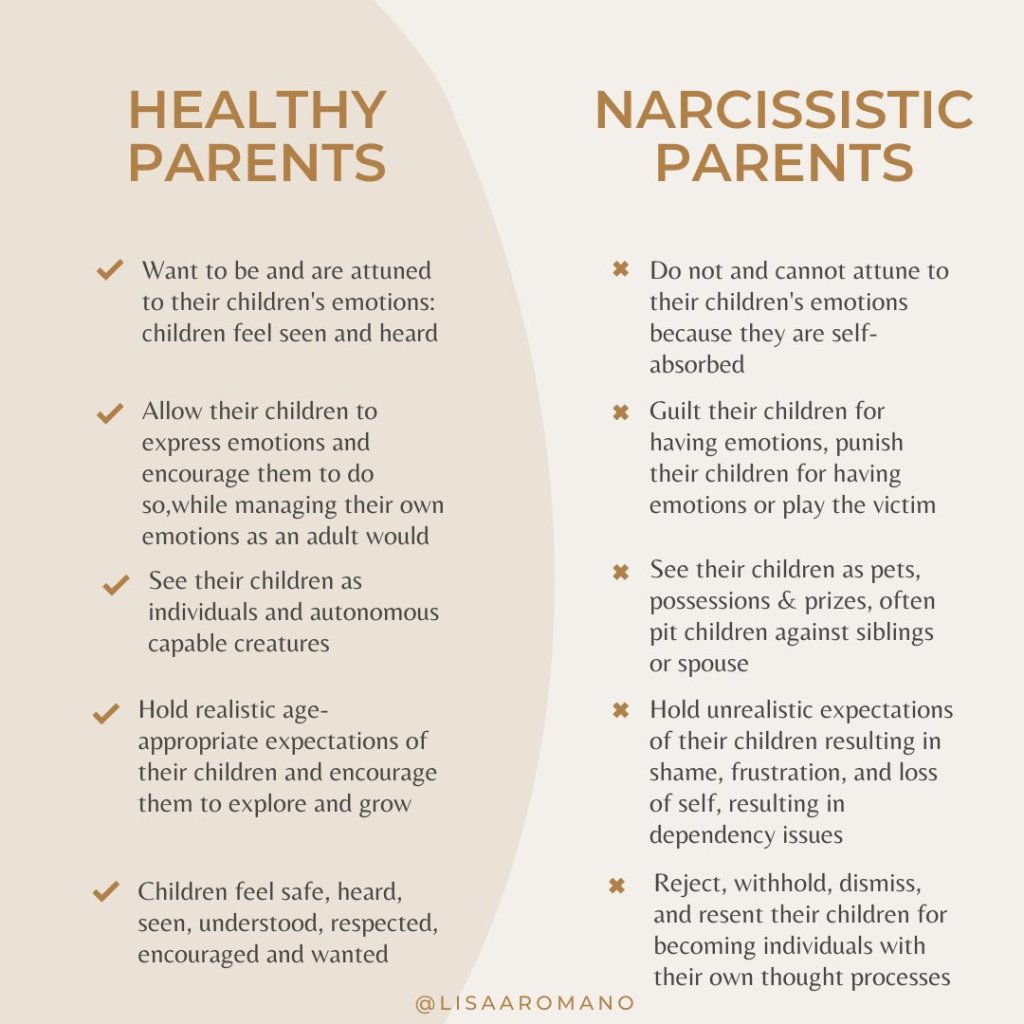
- Lack of empathy: They struggle to understand or validate their children’s feelings, which can lead to children feeling isolated and misunderstood.
- Conditional love: Love and support are given as a reward for meeting the parent’s expectations, rather than as a natural part of parenting.
- Manipulation and control: Narcissistic parents may use guilt, emotional coercion, or threats to control their children’s behavior and decisions, such as choosing a college major or spouse.
- Unrealistic expectations: Children are often expected to be perfect and meet impossible standards, leaving them on a never-ending quest for validation.
- Child as an extension: They may view their children as “special” and extraordinary, reinforcing an inflated sense of superiority, or they may force their children to live vicariously through their own unfulfilled aspirations.
- Emotional unavailability: Children may find themselves taking care of the parent’s emotional needs and being responsible for their feelings, a role they are not equipped for.
Impact on Children
Growing up with a narcissistic parent can have lasting negative effects on a child’s development:
- Mental health issues: Children of narcissistic parents are at a higher risk for developing anxiety, depression, and post-traumatic stress disorder (PTSD).
- Low self-esteem: Children may internalize a sense of never being good enough and struggle with self-doubt and self-criticism.
- Relationship difficulties: They may have trouble forming secure attachments and engaging in healthy, reciprocal relationships.
- Emotional dysregulation: Children may struggle with emotional reactivity and have difficulty managing their own feelings.
How to Handle Narcissistic Parenting
If you have a parent with narcissistic traits, strategies to protect yourself and your child include:
- Focus on the behavior: Instead of diagnosing, focus on the specific harmful behaviors and how they make you feel.
- Set boundaries: Establish firm boundaries with the narcissistic parent to protect your own emotional well-being.
- Seek support: Connect with a support group or a therapist who understands the dynamics of narcissistic relationships.
- Prioritize your child’s well-being: If co-parenting, you can foster positive childhood experiences to build your child’s resilience and buffer the stress of the other parent’s behavior.
- Avoid parental arguments: Do not get drawn into emotional arguments, as this can be emotionally draining and leave you with less energy to support your child.
In my own experience my narcissistic parents never admit guilt when they do something that harms their children, especially me, their adopted child. Im treated with even less empathy than the rest of the children that are their naturally born children and always have been. If confronted, they become emotionally combative immediately. They never ask what they can do to resolve the situation, come to a compromise, or try to understand why I’m upset with them. They simply do not care about my feelings, my opnions, and act as if I’m still a little boy they can boss around. They refuse to participate in any conversation that might make them feel guilty or shame for what they’ve done and never apologize.
There are 10 major signs your parents may be narcissistic parents as described by Psychology Today. Here they are:
- Uses/Lives Through One’s Child
Most parents want their children to succeed. Some narcissistic parents, however, set expectations not for the benefit of the child, but for the fulfillment of their own selfish needs and dreams. Instead of raising a child whose own thoughts, emotions, and goals are nurtured and valued, the offspring becomes a mere extension of the parent’s personal wishes, with the child’s individuality diminished.
In my personal experience my adopted dad Bill was in law enforcement. He encouraged me to be a lawyer. When I wouldn’t be one and spoke out about police brutality, the abuse I suffered as a child in a Christian boarding school he sent me to, and wanted to write and be something different he turned his back on me. Several of the other kids went into law enforcement and he bent over backwards for them. As long as you did what he wanted he cared about you. If you didn’t, he could care less. Same with my mom. As soon as I wasn’t meeting her standards of success she was dissapointed in me. I had failed her and no matter how successful I have been at what I do it doesn’t matter because its not what THEY WANT. They simply refuse to look at it, read my books, look up news I’m in and have made and the progress I’ve made to protect children from abuse. They look away with stubborn ignorance.
2. Marginalization
Some narcissistic parents are threatened by their offspring’s potential, promise, and success, as they challenge the parent’s self-esteem. Consequently, a narcissistic mother or father might make a concerted effort to put the child down, so the parent remains superior. Examples of this type of competitive marginalization include nit-picking, unreasonable judgment and criticisms, unfavorable comparisons, invalidation of positive attitudes and emotions, and rejection of success and accomplishments.
The common themes through these put-downs are: “There’s always something wrong with you,” and “You’ll never be good enough.” By lowering the offspring’s confidence, the narcissistic parent gets to boost her or his own insecure self-worth.
“I pleaded with my mother on the phone for the lab fee of my college science class. She finally agreed to pay, but only after saying that it was a waste of money on me.”
3. Grandiosity and Superiority
Many narcissistic parents have a falsely inflated self-image, with a conceited sense about who they are and what they do. Often, individuals around the narcissist are not treated as human beings, but merely tools (objects) to be used for personal gain. Some children of narcissistic parents are objectified in the same manner, while others are taught to possess the same, false superiority complex: “We’re better than they are.” This sense of grandiose entitlement, however, is almost exclusively based on superficial, egotistical, and material trappings, attained at the expense of one’s humanity, conscientiousness, and relatedness. One becomes more “superior” by being less human.
In my case, my narcissistic parents, cling to the fact they are “good conservative Christians” to assert their supposedly superiority over me and anyone who disagrees with them.
4. Superficial Image
Closely related to grandiosity, many narcissistic parents love to show others how “special” they are. They enjoy publically parading what they consider their superior dispositions, be it material possessions, physical appearance, projects and accomplishments, background and membership, contacts in high places, and/or trophy spouse and offspring. They go out of their way to seek ego-boosting attention and flattery.
For some narcissistic parents, social networking is a wonderland where they regularly advertise how wonderful and envy-worthy their lives are. The underlying messages may be: “I am/my life is so special and interesting,” and “Look at ME – I have what you don’t have!”
“What my mother displays in public and how she really is are very different.”
― Anonymous
5. Manipulation
Common examples of narcissistic parenting manipulation include:
- Guilt trip: “I’ve done everything for you and you’re so ungrateful.”
- Blaming: “It’s your fault that I’m not happy.”
- Shaming: “Your poor performance is an embarrassment to the family.”
- Negative comparison: “Why can’t you be as good as your brother?”
- Unreasonable pressure: “You will perform at your best to make me proud.”
- Manipulative reward and punishment: “If you don’t pursue the college major I chose for you, I will cut off my support.”
- Emotional coercion: “You’re not a good daughter/son unless you measure up to my expectations.”
A common theme running through these forms of manipulation is that love is given as a conditional reward, rather than the natural expression of healthy parenting. On the other hand, the withholding of love is used as threat and punishment.
6. Inflexibility & Touchy
Certain narcissistic parents are highly rigid when it comes to the expected behaviors of their children. They regulate their offspring on minor details and can become upset when there’s deviation. Some narcissistic parents are also touchy and easily triggered. Reasons for irritation towards an offspring can vary greatly, from the child’s lack of attention and obedience, to perceived faults and shortcomings, to being in the presence of the parent at the wrong time, et cetera.
I can’t even talk to my mom because how dare I experess my politial or religious views. She can of course. I cannot. Its always been that way with my mom and dad even when the differences of opinon aren’t overtly offensive. I am simply not allowed to be my own person and express myself.
One reason for the parent’s inflexibility and touchiness is the desire to control the child. The narcissist responds negatively and disproportionally when she or he sees that the offspring will not always be pulled by the strings.
7. Lack of Empathy
One of the most common manifestations of a narcissistic father or mother is the inability to be mindful of the child’s own thoughts and feelings, and validate them as real and important. Only what the parent thinks and feels matters.
Children under this type of parental influence over time may respond with one of three survival instincts: They may fight back and stand up for themselves. They may flee to create distance from their parent(s). Some may begin to freeze and substitute their invalidated real self with a false persona (playing a role), thus adopting traits of narcissism themselves.
8. Dependancy/Codependancy
Some narcissistic parents expect their children to take care of them for the rest of their lives. This type of dependency can be emotional, physical, and/or financial. While there’s nothing inherently wrong with taking care of older parents — it’s an admirable trait — the narcissistic parent typically manipulates an offspring into making unreasonable sacrifices, with little regard for the offspring’s own priorities and needs.
“My mom (a single parent in her late 30s) expects me to support her financially on an ongoing basis. She says that she can’t live without me.”
― Anonymous college student
Some narcissistic parents may also maneuver their adult children into codependency. Psychology professor Shawn Burn defines a codependent relationship as one where “one person’s help supports (enables) the other’s underachievement, irresponsibility, immaturity, addiction, procrastination, or poor mental or physical health.”
9. Jealousy & Or Possesiveness
Since a narcissistic mother or father often hopes that the child will permanently dwell under the parent’s influence, she or he may become extremely jealous at any signs of the child’s growing maturity and independence. Any perceived act of individuation and separation, from choosing one’s own academic and career path, to making friends not approved by the parent, to spending time on one’s own priorities, are interpreted negatively and personally (“Why are you doing this to me?”).
In particular, the appearance of a romantic partner in the adult offspring’s life may be viewed as a major threat, and frequently responded to with rejection, criticism, and/or competition. In the eyes of some narcissistic parents, no romantic partner is ever good enough for their offspring, and no interloper can ever challenge them for dominance of their child.
“How dare that woman take my son away from me? Who does she think she is?”
― Anonymous
10. Neglect
In some situations, a narcissistic parent may choose to focus primarily on her or his self-absorbing interests, which to the narcissist are more exciting than child-raising. These activities may provide the narcissist the stimulation, validation, and self-importance she or he craves, be it career obsession, social flamboyance, or personal adventures and hobbies. The child is left either to the other parent or on his or her own.
In my personal experience my parents shipped me off to an abusive boys home, ignored me about abuse there, then shipped me off to an abusive boarding school, ignored me about abuse and neglect there, then repeatedly neglected any needs I had when I got out like help learning to drive and adapt to focus more on their naturally born kids who were more like them and on themselves.
https://www.psychologytoday.com/us/blog/communication-success/201602/10-signs-narcissistic-parent
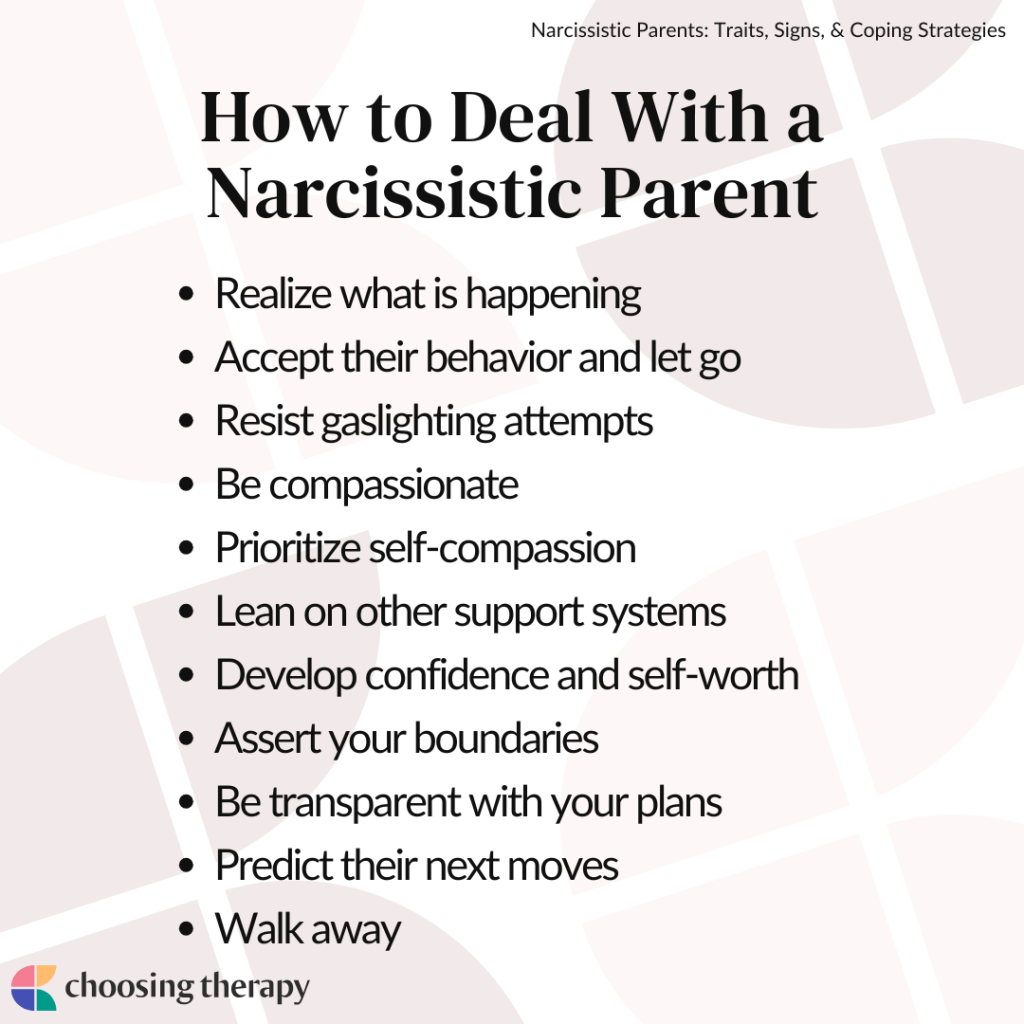
Unfortunately I’ve had to recently walk away from my narcissistic mother. She will never understand the pain that she has caused me and will always make excuses for her actions, deflect blame back onto me, avoid subjects that are uncomfortable and judge me when I don’t meet her expectations. I will never get the unconditional love and support I need from this woman because she is incapable of giving it. My adopted father is dead. I never got that love and support from him either. Their love has always been conditional, shallow, and I was always easy to throw away.
If you have a narcissistic parent in your life I encourage you to just walk away. Find support elsewhere. Stop trying to get them to undestand. They won’t. You will only hurt yourself more trying to get them to understand and change. They won’t change and you will drain yourself trying to get them to respect that you are your own person with your own valid feelings and views. Just walk away and choose to associate with people who respect you and love you for who you really are and that don’t try to manipulate or mold you or use you.

Leave a comment